
Somatosphere welcomes you to the October edition of “In the Journals.” Scroll through our monthly round up of new research across anthropology, STS and social science journals. BioSocieties Modeling the ‘patient cell:’ performances of proximity and the making of pathological proxies Timo Roßmann Scientists evaluate disease models by their capacity to capture salient features of […]

Mad by the Millions: Mental Disorders and the Early Years of the World Health Organization by Harry Yi-Jui Wu (MIT Press: 2021) Harry Yi-Jui Wu’s Mad by the Millions traces the early efforts of the World Health Organization (WHO) to bring psychiatry into the domain of global public health. Drawing on extensive archival materials, Wu […]
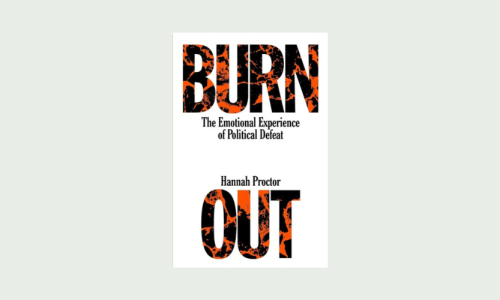
Burnout. The Emotional Experience of Political Defeat, by Hannah Proctor (Verso, 2024) Hannah Proctor’s Burnout is not about how tiredness arises from the daily grind. Instead, “burnout” is conceptualised as an emotional fatigue which emerges from political struggle. Proctor is a historian at the Centre for the Social History of Health and Healthcare at the […]

Reflecting on the complexities of conducting research in a region gripped by administrative upheaval and political uncertainty, I write to open up this forum to fellow anthropologists and scholars to share personal experiences and emotional challenges and its impact on the well-being and safety of both the researcher and our interlocutors. Jammu City in the […]

Dörte Bemme: Tell me a little bit about Somatosphere’s origin story. How did it all begin? Eugene Raikhel: The website was launched in the middle of 2008, but the important broader context is that this was a time when there was a flourishing blogosphere in anthropology and related fields. There was a lot of activity […]

In this forum, five scholars from different but intersecting fields of historical research engage with Hannah Zeavin and Jeremy Greene’s recent books on telehealth and telemedicine. As all of the contributors highlight, Zeavin and Greene’s books provide inspiring analyses of the potentials and limitations of electronic technologies in medicine and healthcare. In the following, I […]

The increased demand for distant cures amid heightened concerns about infection in healthcare facilities, coupled with the “great resignation” in medicine since the COVID pandemic, have together created the unfortunate circumstances in which we find the American healthcare system in 2024. This is a moment, like many we have seen before, in which new, unproven […]
The Distance Cure and The Doctor Who Wasn’t There are political books about medical media. Zeavin offers illuminating analyses of a range of distant psychotherapies: epistolary analysis, telephonic church services, suicide crisis telephone hotlines, computer-based therapies, and e-therapy (what Zeavin calls “therapeutic written speech”). For her, the media involved in these therapies are “active metaphors […]
“all new media deal in futures” -Jeremy Greene “automation is the dream of autonomy” -Hannah Zeavin It was at once an odd experience and an exhilarating one. Sitting at the edge of the sofa, I leaned over towards the coffee table to turn on my laptop and open the required application. I waited, intermittently checking […]

Hanna Zeavin’s The Distance Cure: A History of Teletherapy, and Jeremy A. Greene’s The Doctor Who Wasn’t There: Technology, History, and the Limits of Telehealth, are both histories of technology and medicine that question the centrality of the expert as the deciding factor in the success or failure of medical technologies. In Zeavin’s book, the […]
To read these two brilliant books side by side is an exhilarating experience—they not only offer new historical and theoretical insights into the role of media in clinical care, but they point towards unique (and uniquely thorny) historiographic questions. For as these media wended their way through medical and therapeutic treatments, they also left peculiar […]
